LOCAL REALITY FIELD NOTES / PRACTICAL ASTRONOMY
Best binoculars for stargazing: how to choose your first pair
The right binoculars are the pair you can hold comfortably, focus correctly, and actually take outside. Here is how to compare the numbers without buying more magnification than you can use.
BUYING GUIDE · UPDATED OCTOBER 14, 2026 · NOT A HANDS-ON PRODUCT TEST
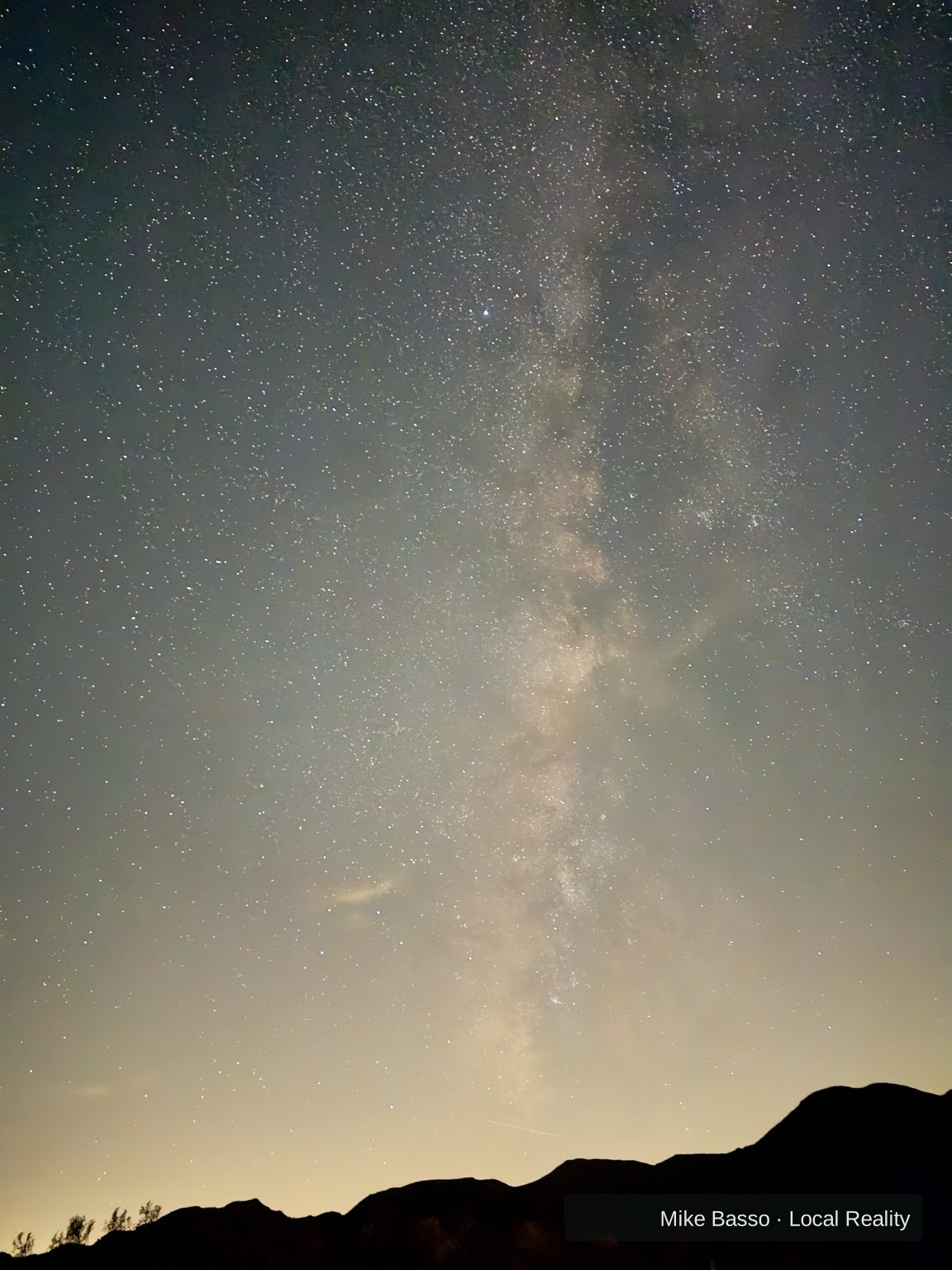
Short answer: start by comparing ordinary 7×50, 8×42, and 10×50 binoculars. A lower magnification is often easier to hold steady; larger front lenses can help in low light but also add weight. There is no universally best pair, and you do not need astronomy-branded binoculars to begin.
Choose by how you will use them
| Configuration | Good fit when… | Tradeoff |
|---|---|---|
| 7×50 | You want a relatively steady, wide handheld view. | Large exit pupil and body may be bulky; your eyes may not use all the available light. |
| 8×42 | You want one compact pair for daytime and occasional night use. | Smaller objectives gather less light than a comparable 50 mm pair. |
| 10×50 | You want a little more magnification and can brace your arms. | Hand shake is more visible than at 7× or 8×. |
| 15×70 or larger | You are willing to use a suitable tripod or mount. | Weight, mounting and setup become part of the system. |
What do the two numbers mean?
In 10×50, the first number is magnification: objects appear about ten times closer in angular size than with the unaided eye. The second is the diameter of each front objective lens in millimeters. Larger objectives can collect more light, but the final view also depends on optical quality, sky darkness, your eyes, and steadiness.
A useful quick calculation is exit pupil: objective diameter divided by magnification. A 10×50 pair has a 5 mm exit pupil; a 7×50 pair has about 7.1 mm. A larger exit pupil does not automatically mean a better view for every observer or every sky.
What can binoculars show you?
- The Moon: broad lunar features and the boundary between lunar day and night. Brace your elbows for a steadier view.
- Star fields: many stars that blend together to the naked eye, especially under a darker sky.
- Bright clusters: targets such as the Pleiades can look especially rewarding in a wide field.
- Jupiter: depending on conditions and the binoculars, its brightest moons may appear as tiny points nearby; do not expect detailed planetary disks.
Binoculars are not a substitute for a telescope when your goal is high-magnification detail such as Saturn's rings or subtle planetary features. They are a useful way to learn the sky and decide what you enjoy observing.
Five checks before you buy
- Weight and grip: hold a similar-size pair for a few minutes. Comfort matters more than a spec sheet.
- Eye relief: if you observe with glasses, check whether the eyecups and eye relief let you see the full field comfortably.
- Focus: the focus wheel should move smoothly, and the binoculars should adjust for differences between your eyes.
- Field of view: a wider field can make it easier to find and follow star patterns.
- Return policy and fit: verify current specifications, warranty, seller terms and the ability to return an uncomfortable pair.
What not to pay extra for first
Do not choose solely by a huge magnification number, claims about “maximum power,” or a long list of accessories. Extremely high handheld magnification is difficult to keep steady. First decide whether you need a light, handheld pair or a mounted observing setup.
Compare current options
Once you know your preferred size and mounting needs, use a retailer’s category to compare actual specifications. The catalog changes, and this guide does not claim to have tested every item.
- Compare binoculars and accessories at Agena Astro ↗ — check magnification, objective size, weight, field of view and stock.
- Browse the full Agena Astro catalog ↗ — verify current pricing, shipping, return terms and compatibility.
Affiliate disclosure: Local Reality may earn a commission from qualifying purchases through these links at no additional cost to you. This is a decision guide, not a hands-on ranking or a claim that the highest-priced product is best.
Try before you commit
If possible, visit a public astronomy night or local astronomy club event and ask to look through different binoculars. Notice how quickly you can find a target, how steady the view feels, and whether the eyecups work for you. That short trial can be more useful than comparing dozens of listings.
Start with a no-purchase first-night plan ↗ or compare binoculars with a telescope ↗.
Sources and further reading
- NASA Night Sky Network: Binoculars, a great first telescope
- Agena Astro: current binoculars category and specifications
Specifications and availability can change; consult the manufacturer and seller before buying.